How to Start Day Trading Futures With a Prop Firm Account
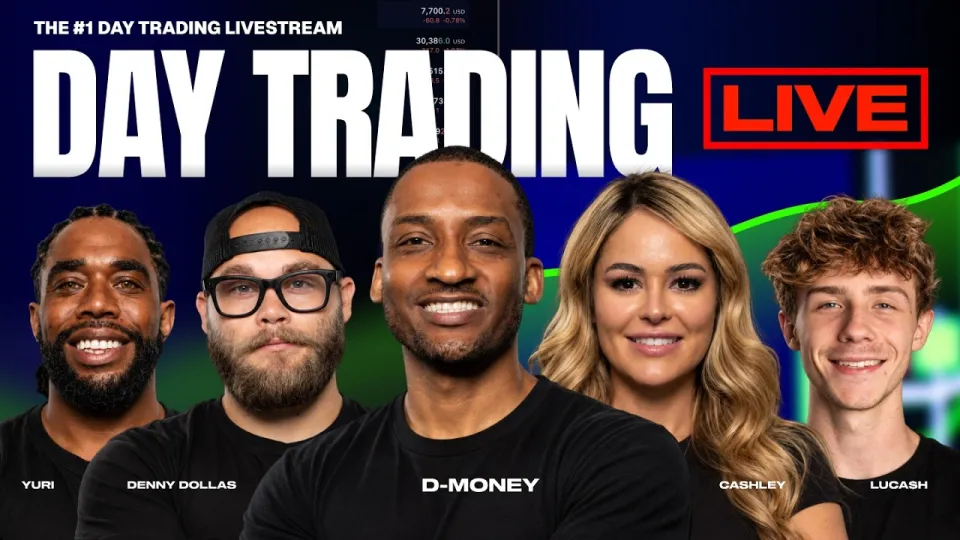
Video: LIVE DayTrading! #1 Watched Futures Trading Show!
You can order the same kind of articles for your own video to boost it on YouTube and Google. Just message the Telegram bot @sat_sit_bot. It writes articles around your video, embeds the video and publishes them on popular niche websites (no ads). Free trial — 50 articles.
· based on the channel Patrick Wieland
Day trading futures with a prop firm account means paying a one-time evaluation fee, hitting a profit target without breaking the firm's daily loss or drawdown limits, and then trading the firm's capital for a profit split. The fastest route is to pick one instrument, one setup and one risk rule, then prove consistency on a simulated evaluation before risking a funded account. That is the model behind most live futures streams, including the show hosted by Patrick Wieland, where traders work prop firm accounts in real time.
What the Patrick Wieland live futures show actually covers
The show is a live day trading broadcast from the BDH trading floor, running every trading day with real-time futures trading, market analysis, giveaways and prop firm reviews. Patrick Wieland trades under the handles PW and Daddy Warbux, and he is joined by a regular crew: Damareous Young (DMoney), Lucas Kennard (Lucashhh) and Denny Jones (Denny Dollas). The format matters for anyone learning to trade, because it shows the unglamorous parts of the job — waiting for a setup, sizing a position, taking a small loss and stopping for the day.
The stream also doubles as a prop firm marketplace. The channel publishes an OnlyPropFirms ranking list: Lucid Trading first, TakeProfitTrader second, Apex Trader Funding third, followed by Tradeify, Legends Trading, BluSky Trading, TradeDay and MyFundedFutures. Each entry comes with a referral link, and the companion site onlypropfirms.com aggregates discounts, reviews and account comparisons. For a beginner, that list is a starting point, not a recommendation — the right firm depends on your instrument, your risk tolerance and the payout rules you can actually live with.
How to pick a prop firm for futures trading
Choosing a firm is a risk-management decision before it is a price decision. Futures prop evaluations are built around three numbers: the profit target, the maximum daily loss and the trailing or static drawdown. Read those three before you look at the profit split.
- Check the drawdown type. A trailing drawdown follows your highest equity point and can tighten as you profit; a static drawdown stays fixed at the starting balance. Trailing drawdowns punish giving back gains, so they suit traders who bank profits and stop.
- Check the daily loss limit. If the limit is $1,000 on a $50,000 account, a single NQ contract can move that much in minutes. Size so that two or three consecutive losers stay inside the limit.
- Check the payout schedule. Some firms pay on demand after a set number of winning days; others require a minimum balance or a consistency rule that caps how much of your profit can come from one trade.
- Check the platform. Most futures evaluations run on Tradovate, NinjaTrader or TradingView-integrated feeds. If you already know one platform, that familiarity is worth more than a slightly cheaper fee.
- Check the reset cost. A cheap evaluation with an expensive reset is more costly than a higher fee with free resets.
The core day trading setup and risk rules
A workable futures day trading plan fits on one page. Pick one market — ES, NQ, CL or GC — and one setup, then define entry, stop and target before the session opens. Most intraday futures traders use a stop measured in ticks, not dollars, because tick value differs by contract: ES is $12.50 per tick, NQ is $5.00, and a single NQ contract is four times the notional exposure of one ES contract.
Position sizing follows from the stop. If your account allows a $500 risk per trade and your stop is 20 ticks on NQ, that is $100 per contract, so the maximum size is five contracts — and fewer if you want room for a second attempt. A common beginner error is sizing off the profit target instead of the stop, which turns a normal losing streak into a blown evaluation.
The trade management rules that survive contact with a live market are boring: take the stop without negotiating, move to breakeven only after a defined level is reached, and stop trading after two losses or after hitting the daily goal. On a live stream you will see traders sit through long quiet periods, which is the honest picture of intraday futures trading.
Copy trading and automation in futures accounts
Copy trading lets one trader's orders mirror into other accounts, and in the prop firm world it usually means copying a signal provider or running the same strategy across several evaluations at once. It is attractive because it removes execution hesitation, but it does not remove risk — every copied account carries the same drawdown, and firms often restrict copy trading between accounts you own.
Before using any copy service, confirm three things: whether the firm permits it, whether the latency between the signal and your fill is acceptable, and whether the provider's worst losing day fits inside your daily loss limit. A provider with a strong average return but one catastrophic day will fail an evaluation faster than a slower, steadier one.
Why viewers ask about the setup and the course
The most common questions under live futures streams are about the exact setup being traded and where to learn it. That is a reasonable instinct, but the setup is rarely the missing piece — the risk rules around it are. Two traders can take the same entry and get opposite results because one risks 1% and the other risks 10% of the account.
The channel sells a two-hour course for $99 through onlypropfirms.com, described as the strategy Patrick teaches and trades live on stream. Treat it as one input among several: practice the rules on a simulated account, journal every trade with entry, stop, target and outcome, and only then scale size. Free alternatives exist too — replay the archived streams, note where the entries were taken and what the stop was, and build your own sample of at least 50 trades before judging whether a setup works.
Common mistakes that end evaluations early
Most failed evaluations share the same handful of causes, and none of them are about prediction.
- Overtrading after a loss, which turns a planned -$300 day into a -$1,200 day.
- Ignoring the daily loss limit until it is breached, which ends the account regardless of the overall drawdown.
- Oversizing on news events such as CPI, FOMC or NFP, when spreads widen and slippage grows.
- Switching instruments mid-evaluation, which resets your learning curve and your statistics.
- Trading without a hard stop, hoping a losing position comes back.
A simple fix is a pre-session checklist: maximum trades, maximum daily loss, one instrument, one setup, and a hard stop time. Write it down, and treat a breach as a failed day rather than a failed account.
What a realistic first month looks like
A realistic first month is measured in process, not profit. Spend week one on a simulated account with the same size you intend to trade, week two collecting 50 journaled trades, week three reviewing which sessions produced the best results, and week four deciding whether to buy an evaluation. If the journal shows a positive expectancy after costs, the evaluation fee is a business expense; if it does not, the fee is a donation.
Live shows are useful here because they compress years of screen time into hours of watching, and because the hosts trade the same instruments and platforms retail traders use. Watch how they handle a losing trade, not just a winning one — that is where the real information sits.
Final thoughts on learning to day trade futures
The path from beginner to funded futures trader runs through risk rules, not secret entries: choose a firm whose drawdown and payout terms you understand, trade one instrument with one setup, size from your stop, and stop for the day when the plan says so. The Patrick Wieland live show and the BDH crew provide a transparent look at that process, from real-time executions to prop firm rankings and the questions viewers keep asking about setups and courses. Use the stream as a study tool, verify every claim in your own journal, and remember that futures trading carries substantial risk and past performance does not guarantee future results.
Key takeaways
- Prop firms let traders trade futures with the firm's capital after passing an evaluation, usually for a one-time fee and a share of profits.
- Patrick Wieland runs a live futures day trading show on the BDH floor with a crew of traders and publishes a prop firm ranking list led by Lucid Trading, TakeProfitTrader and Apex Trader Funding.
- Most evaluations cap daily loss and overall drawdown, so position sizing matters more than win rate.
- His 2-hour strategy course costs $99 and is sold through onlypropfirms.com, which also compares firms and discounts.
- Live streams mix real-time futures trading, market analysis, giveaways and prop firm reviews, and viewers regularly ask which setup is being traded.
Source: LIVE DayTrading! #1 Watched Futures Trading Show! · Markdown version
Questions & answers
What is the best prop firm for futures day trading?
There is no single best firm, because the right choice depends on drawdown type, payout schedule and platform. The channel's ranking lists Lucid Trading, TakeProfitTrader and Apex Trader Funding at the top, followed by Tradeify, Legends Trading, BluSky Trading, TradeDay and MyFundedFutures. Compare the daily loss limit and reset cost before the profit split, since those two terms decide whether an evaluation is survivable.
How much capital do I need to start day trading futures?
You do not need a large personal account if you use a prop firm evaluation, where the fee is typically a few hundred dollars for simulated buying power of $50,000 or more. What you do need is enough risk capital to absorb several reset fees while you learn. Size positions so a normal losing streak stays well inside the daily loss limit.
Is copy trading allowed on futures prop firm accounts?
Rules vary by firm and by account type, and many firms restrict copying between accounts you control or require disclosure of signal providers. Check the firm's terms before connecting any copy service. Even when it is allowed, copied trades carry the same drawdown risk, so confirm that the provider's worst day fits your loss limit.
Where can I learn the setup traded on the live stream?
The channel sells a two-hour strategy course for $99 through onlypropfirms.com, which is described as the approach traded live on stream. You can also study archived broadcasts for free, journaling entries, stops and outcomes to build your own sample. Either way, validate the setup on a simulated account before paying for an evaluation.